The Nobel Prize is undoubtedly the ultimate symbol of human excellence, the gold standard by which the greatest achievements in science, literature, and peace are measured. But behind the majestic façade of this prestigious award lies a history full of paradoxes, myths, and conflicts that few know about.
Get ready to discover the hidden side of one of the most important institutions in the world.
1. The "Merchant of Death" Myth May Not Be Entirely True
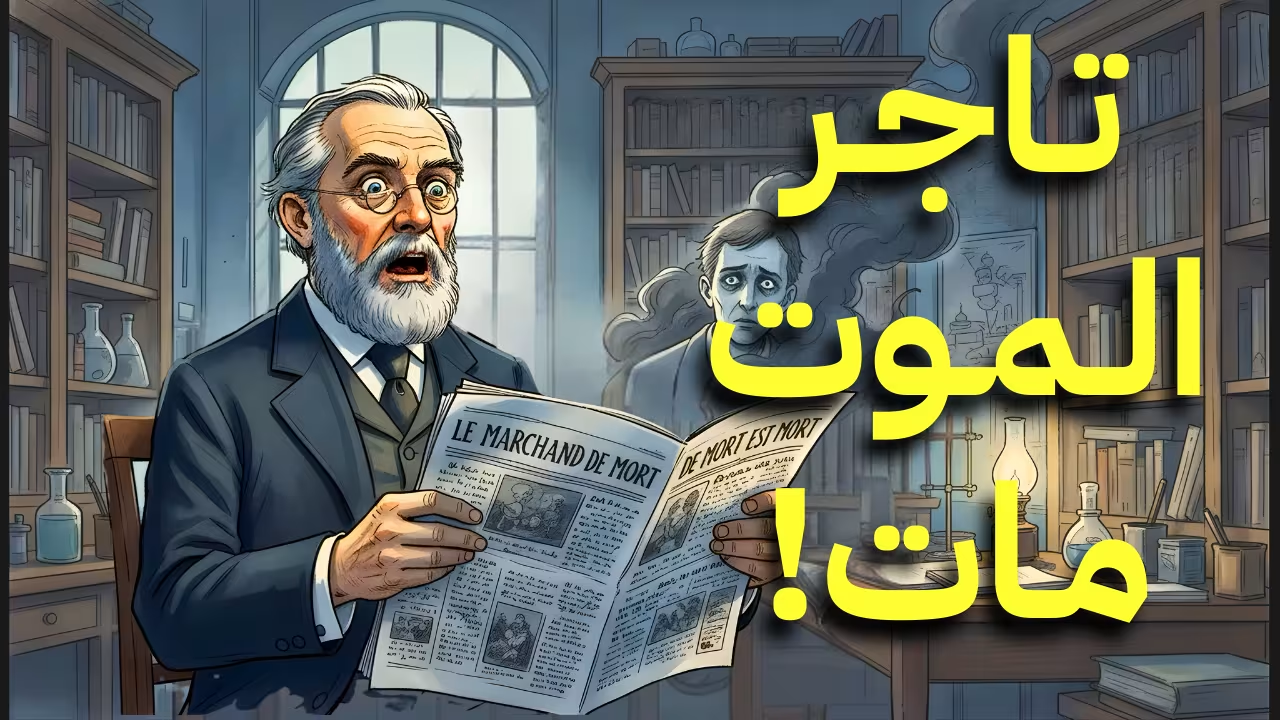
The most common narrative about the birth of the prize is purely dramatic. The story goes that in 1888, when Alfred's brother Ludwig died, a French newspaper mistakenly published an obituary for Alfred himself with the brutal headline: "Le marchand de la mort est mort" (The Merchant of Death is Dead). It is said that Nobel, reading how history would remember him, decided to change his will to correct his legacy.
However, modern historians question this account, suggesting the phrase "Merchant of Death" might be an exaggeration added later. What is certain is that the press was hostile towards him, but the story might not be as literally dramatic as told, showing how history can turn into established myth.
2. The Inventor of Dynamite Believed His Inventions Would End War
In a strange intellectual paradox, Alfred Nobel did not see himself as a warmonger, but a "peace merchant." He firmly believed in "Mutual Assured Destruction," thinking that a weapon destructive enough would make war impossible.
In a famous letter to the peace activist Bertha von Suttner, he wrote:
"I wish I could produce a substance or a machine of such frightful efficacy for wholesale destruction that wars should thereby become altogether impossible... when armies realize they can be annihilated in an instant, they will abide by golden peace."
3. The Prize Was Almost Cancelled Before It Began
When Nobel's will was opened in 1896, a legal and political storm erupted. His relatives contested the will, and King Oscar II of Sweden criticized it as "unpatriotic" for sending Swedish money abroad.
If not for the bravery of the young executor, Ragnar Sohlman, the prize wouldn't exist. Sohlman essentially smuggled Nobel's assets from Paris banks to Sweden in secret, using trains and carriages to avoid French taxes and confiscation, in an operation resembling a spy movie.
4. The Economics Prize Is Not Nobel's Idea
Many believe the Economics Prize is part of Nobel's will, but this is a common misconception. It was not among the original five categories. It was established much later, in 1968, by the Swedish Central Bank.
Its official name reveals the truth: "The Sveriges Riksbank Prize in Economic Sciences in Memory of Alfred Nobel." Nobel's heirs considered this an "identity theft" and a marketing move by the bank, sparking debate about its alignment with the founder's values.
5. The Prize's "Greatest Sin": Ignoring Gandhi
The Nobel Committee itself admits that its biggest failure was never awarding the Peace Prize to Mahatma Gandhi. He was nominated five times.
In 1948, there was a strong intention to finally award him, but tragedy struck. Gandhi was assassinated just two days before the nomination deadline. Since the rules were unclear about posthumous awards, the committee decided not to award the prize that year, declaring that "there was no suitable living candidate"—a silent tribute to Gandhi's unmatched legacy.
Conclusion
The story of the Nobel Prize is not just a record of brilliant winners; it is a complex saga full of human drama and historical irony. It leaves us wondering: What would Alfred Nobel think if he saw how his legacy evolved to become humanity's greatest symbol of hope?