- Details
- Category: Science & Knowledge
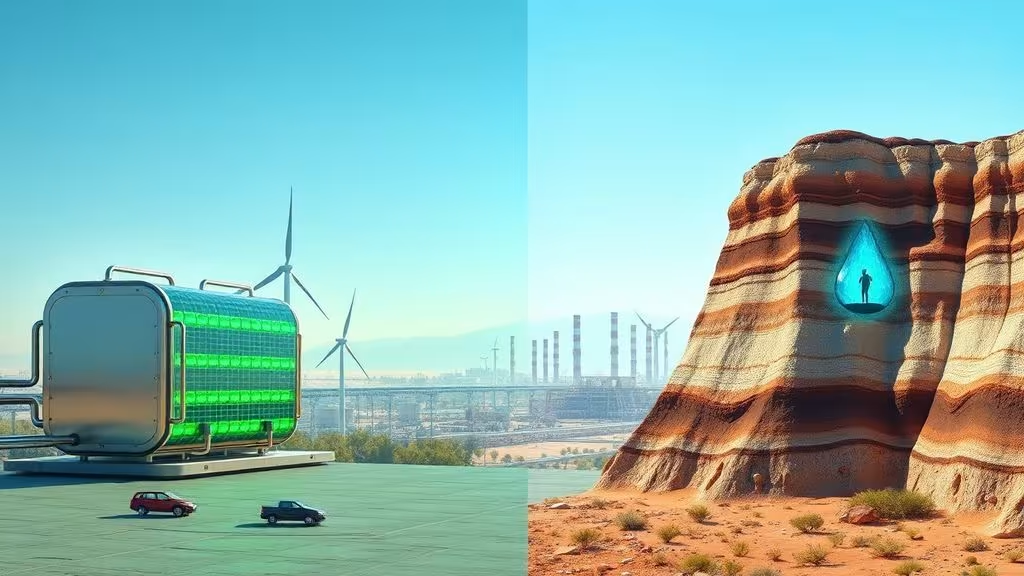
For decades, the world has chased a clean energy dream, often feeling like a puzzle with a missing piece. Today, that piece has emerged: hydrogen. But not just any hydrogen – we're talking about a vibrant spectrum of production methods, led by the promise of 'green' hydrogen, and the unexpected discovery of 'white' hydrogen hidden beneath our feet. This isn't just a fuel; it's a strategic game-changer, especially for the Middle East and North Africa (MENA) region, poised to become a global clean energy superpower. Forget what you thought you knew about energy; the hydrogen revolution is here, and it’s more complex, exciting, and transformative than anyone predicted.
- Details
- Category: Tech & Telecom
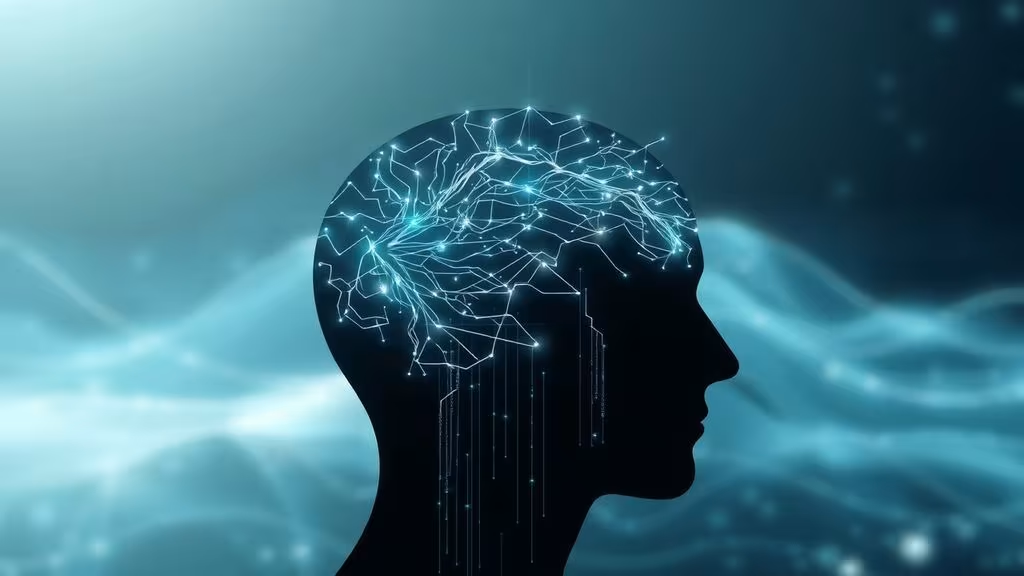
Imagine a loved one passes away, but their presence online lingers. You receive a birthday notification, a suggested memory, or even a message, seemingly from them. Is this a comfort or a haunting? This isn't science fiction anymore. In the 21st century, death isn't just a biological end; it's a complex digital dilemma. Our 'digital footprints'—social media accounts, text messages, photos, financial records, biometric data—don't disappear with us. Instead, they remain active, processed by powerful servers, raising profound questions: Who owns this data? How do algorithms handle it? And to what extent can technology truly simulate human consciousness after death?

- Details
- Category: Tech & Telecom
When someone dies, their physical presence vanishes. Yet, a vast, often invisible, part of them lingers: their digital footprint. This isn't just a few old emails; it's a massive, intricate web of social media accounts, text messages, photos, financial records, and biometric data. This digital legacy doesn't simply disappear when the heart stops beating. Instead, it lives on, processed by giant tech company servers, raising profound questions about ownership, algorithmic management, and whether technology can truly simulate a deceased person's consciousness.

- Details
- Category: Tech & Telecom
Imagine a world where poverty is a relic of the past, where everyone has enough to live with dignity, regardless of their work status. For centuries, this idea – a universal basic income (UBI) – was seen as a utopian dream. But today, fueled by rising inequality, unstable job markets, and the looming shadow of AI, UBI is no longer just a dream; it's becoming an economic necessity. This deep dive explores how UBI has transformed from a fringe philosophy into a crucial debate shaping our modern world.

- Details
- Category: Tech & Telecom
Imagine a world where trust isn't placed in people or institutions, but in pure mathematics and code. A world where transactions are guaranteed, agreements execute themselves, and every record is unchangeable. For centuries, our societies relied on trusted intermediaries – banks, governments, notaries – to manage our money and validate our agreements. But these centralized systems, while foundational, carried inherent risks: a single point of failure, susceptibility to manipulation, and a lack of transparency. Then came blockchain, a revolutionary technology promising a paradigm shift: computational trust [1].