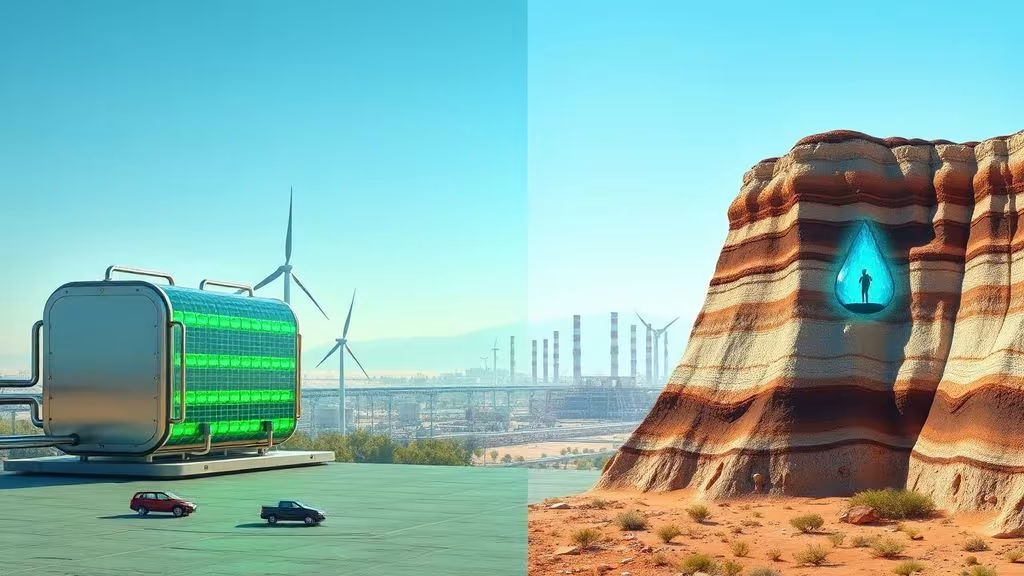
For decades, the world has chased a clean energy dream, often feeling like a puzzle with a missing piece. Today, that piece has emerged: hydrogen. But not just any hydrogen – we're talking about a vibrant spectrum of production methods, led by the promise of 'green' hydrogen, and the unexpected discovery of 'white' hydrogen hidden beneath our feet. This isn't just a fuel; it's a strategic game-changer, especially for the Middle East and North Africa (MENA) region, poised to become a global clean energy superpower. Forget what you thought you knew about energy; the hydrogen revolution is here, and it’s more complex, exciting, and transformative than anyone predicted.
The Green Revolution: Unpacking Hydrogen's Power
Imagine a world where industries run on a fuel that only produces water as a byproduct. That's the promise of hydrogen. But the term 'hydrogen' covers a lot of ground. Its 'color' simply tells us how it was produced and its environmental footprint. While grey hydrogen, made from fossil fuels, dominates today, the future belongs to green hydrogen.
What is Green Hydrogen?
Green hydrogen is the gold standard for clean energy. It's produced by splitting water (H2O) into hydrogen (H2) and oxygen (O2) using a process called electrolysis[1]. The 'green' part comes from using only renewable energy sources, like solar, wind, or hydropower, to power this process. No fossil fuels means zero carbon emissions, making it a critical tool for decarbonizing heavy industries like steel, cement, shipping, and aviation.
How We Make Green Hydrogen: The Electrolyzer Evolution
Electrolyzers are the heart of green hydrogen production, and their technology is rapidly advancing:
- Alkaline Electrolyzers (AEL): These are the most mature and widely used. They rely on an alkaline electrolyte and common metals like nickel, offering lower capital costs. However, they are less flexible to fluctuating renewable energy sources.
- Proton Exchange Membrane (PEM) Electrolyzers: The preferred choice for many new projects. PEM electrolyzers use a solid polymer membrane, allowing for high-purity hydrogen and quick response times to changes in renewable energy supply. The challenge? They require expensive noble metals like platinum and iridium.
- Solid Oxide Electrolyzer Cells (SOEC): The next generation. SOECs operate at very high temperatures (700-850°C), using steam instead of liquid water. They are highly efficient, even utilizing waste heat, and can reverse operation to act as fuel cells. However, their high-temperature operation makes them complex and less durable.
The Next Wave: Innovative Hydrogen Tech
Beyond these established methods, new technologies are emerging, such as Anion Exchange Membrane (AEM) electrolyzers, which combine the benefits of AEL and PEM without noble metals, and E-TAC, which separates hydrogen and oxygen production in time and space, eliminating costly membranes.
Manufactured vs. Wild: The White Hydrogen Mystery
For a long time, scientists believed hydrogen didn't naturally exist in its pure form. You had to make it. But a new discovery has changed everything.
The Human Touch: Industrial Hydrogen
Until recently, nearly all hydrogen was 'manufactured' by breaking chemical bonds in hydrogen-containing materials. This is an energy-intensive process. Green hydrogen uses water and renewable electricity. Grey hydrogen, the most common type today, uses natural gas, releasing significant carbon emissions.
Earth's Secret Stash: Natural "White" Hydrogen
Imagine finding a naturally occurring, inexhaustible clean fuel deep underground. That's 'white' or 'gold' hydrogen. Geologists and energy companies are now actively searching for it, just like they do for oil and gas. White hydrogen forms through geological processes:
- Serpentinization: Hot groundwater reacts with iron- and magnesium-rich rocks, releasing hydrogen gas as iron oxidizes.
- Radiolysis: Natural radiation from elements like uranium and thorium splits water molecules in deep rocks.
The Global Hunt: Where White Hydrogen is Hiding
While still in early exploration, white hydrogen has already made an impact. The village of Bourakébougou in Mali has been using naturally occurring hydrogen (98% pure) to generate electricity since 2012, with no drop in pressure, suggesting a renewable source [12]. Huge potential deposits have also been found in France's Lorraine Mining Basin [12], and active exploration is underway in Oman, Australia, and the US.
The Cost Clash: Green vs. White
Early estimates suggest white hydrogen could be incredibly cheap to extract, costing as little as $0.5 to $1 per kilogram [3]. This is significantly less than current green hydrogen costs ($3-6/kg) and even grey hydrogen. If proven commercially viable, white hydrogen could be a fierce competitor, potentially reshaping the entire energy landscape.
The Rainbow Code: Understanding Hydrogen's Colors and Purity
Hydrogen's 'color' spectrum is a simple way to classify its production method and carbon footprint. But for industrial use, purity is even more critical.
Beyond Green: A Spectrum of Production Methods
The hydrogen rainbow includes many colors:
- Green: From renewable energy and water, zero carbon emissions.
- Grey: From natural gas, high CO2 emissions.
- Blue: From natural gas with Carbon Capture and Storage (CCS), lower emissions.
- Turquoise: From methane pyrolysis, producing solid carbon instead of CO2.
- Pink/Red: From nuclear energy, zero carbon emissions.
- Yellow: From mixed grid electricity, variable emissions.
- White: Naturally occurring geological hydrogen, very low emissions.
Purity is Power: Why Grades Matter
Beyond color, hydrogen purity defines its suitability for different applications. International standards like SAE J2719 and ISO 14687[4] set strict limits for impurities.
- Fuel Cell Grade (Grade D): Requires ultra-high purity, typically 99.97% to 99.999% [5]. Even tiny amounts of impurities like carbon monoxide (less than 0.2 ppm) or sulfur can poison the platinum catalysts in fuel cells, causing permanent damage. This grade is essential for passenger cars, buses, and trucks.
- Industrial Grade: Purity ranges from 99.0% to 99.9% [5]. It allows for higher levels of impurities like water, nitrogen, and methane. This grade is suitable for industrial processes like combustion in furnaces, ammonia production, and methanol synthesis, which are less sensitive to impurities.
- High Purity / Ultra-Pure (Six Nines): Demands extreme purity of ≥99.9999% [6]. Critical for semiconductor manufacturing and electronics, where even a single impurity atom can destroy microcircuits.
The Price Tag: Unlocking Green Hydrogen's Economic Future
The biggest hurdle for green hydrogen today is its cost. But the numbers are changing rapidly.
The Current Reality: What Hydrogen Costs Today
Currently, green hydrogen is 2-3 times more expensive than grey hydrogen. However, recent data shows significant variations based on production method and geography [7]:
- Grey Hydrogen: $1.0 - $2.5/kg (driven by natural gas prices)
- Blue Hydrogen (with CCS): $1.5 - $4.5/kg (includes capture and storage costs)
- Green Hydrogen: $2.5 - $6.5/kg (dominated by renewable electricity costs and electrolyzer CAPEX)
- White Hydrogen (natural): Estimated $0.5 - $1.0/kg (exploration and drilling costs, no manufacturing)
MENA's Edge: The Blueprint for Cheaper Green Hydrogen
The future cost trajectory for green hydrogen shows a sharp decline, driven by two key factors:
- Falling Electrolyzer Costs: Thanks to economies of scale and technological advancements, the capital cost (CAPEX) of electrolyzers is dropping significantly.
- Cheap Renewable Energy in MENA: The MENA region has some of the world's lowest costs for solar energy (under $0.02/kWh in some tenders). This is a massive operational cost (OPEX) advantage for green hydrogen production [8].
Specific regional data highlights this potential:
- Saudi Arabia: Studies suggest Saudi Arabia could achieve the lowest green hydrogen production costs globally, potentially reaching $1.0/kg in the long term, with current estimates around $2.16/kg [9]. This is due to a unique blend of abundant solar and wind resources and vast land availability.
- Egypt: Government forecasts indicate green hydrogen costs starting at $2.68/kg by 2025, aiming for $1.7/kg by 2050 [10].
- Qatar: Blue hydrogen costs are estimated at $2.23/kg, while green hydrogen ranges from $2.61 to $3.31/kg [11], reflecting Qatar's competitive edge in blue hydrogen due to its vast natural gas reserves.
Hydrogen's New Frontier: Transforming Industries
Green hydrogen's true value lies in its versatility. It can decarbonize sectors that electricity alone cannot.
Steel's Green Makeover
Steel production is a major emitter. Green hydrogen acts as a reducing agent, replacing coking coal to extract oxygen from iron ore. This process produces water vapor instead of carbon dioxide [13]. The UAE is pioneering this with EMSTEEL's green steel pilot project, aiming for commercial production and export to Europe by 2024 [14].
Fueling Tomorrow's Journeys
For heavy transport and long distances, hydrogen is ideal:
- Trucks and Buses: Fuel cells offer long range and quick refueling, making them suitable for road freight and logistics [15].
- Shipping: Green ammonia and methanol (hydrogen derivatives) are seen as the future fuels for mega-ships, drastically reducing emissions in the maritime sector [16].
- Aviation: Research is ongoing into liquid hydrogen and sustainable aviation fuels (SAF) for aircraft, promising zero-emission flights [16].
Powering the Grid: Storage Solutions
Hydrogen acts as a massive chemical battery [17]. Excess renewable electricity, especially from solar during peak daytime hours, can be converted into hydrogen and stored in salt caverns or tanks. This stored hydrogen can then be reconverted to electricity when the sun isn't shining or the wind isn't blowing, ensuring grid stability and reliability.
MENA's Bold Play: A Global Hydrogen Hub
The MENA region is at the forefront of the global hydrogen movement, transitioning from oil exporters to green energy leaders. Over 122 hydrogen projects were announced in Arab countries by the end of 2024 [18].
Saudi Arabia: The Giga-Project Leader
Saudi Arabia is pursuing mega-projects for global export, with the NEOM Green Hydrogen Project (NGHP) being the world's largest under construction. With investments totaling $8.4 billion, it aims to produce 600-650 tons of green hydrogen per day by 2026, converting it to 1.2 million tons of green ammonia annually for export [9]. This project leverages 4 GW of solar and wind power, integrated to ensure continuous operation without expensive batteries.
Egypt: Gateway to Green Energy
Egypt leads Arab countries in project numbers, benefiting from its strategic location on the Suez Canal. By late 2024, Egypt had 39 announced projects, with estimated direct foreign investments of $215.5 billion for 2021-2023 [19]. Projects like SCZone aim to establish Egypt as a global hub for green fuel bunkering for ships, including partnerships with Scatec, Masdar, and Hassan Allam.
UAE: Driving Innovation and Application
The UAE focuses on rapid practical application and strategic partnerships. Beyond the pioneering green steel project, the UAE is developing projects at Mohammed bin Rashid Solar Park, targeting 1.4 million tons of production by 2031 and 15 million tons by 2050 [20]. Masdar plays a pivotal role in developing projects locally and globally.
Oman & Morocco: Emerging Giants
- Oman: Has allocated vast areas (50,000 km2) for hydrogen projects, aiming to produce 1 million tons by 2030, becoming a major global exporter [18].
- Morocco: Benefits from its proximity to Europe, existing pipeline infrastructure for hydrogen derivatives, and exceptional renewable energy resources [21].
OAPEC's Vision
OAPEC (Organization of Arab Petroleum Exporting Countries) reports highlight the accelerated growth of the hydrogen sector in the Arab region, emphasizing that countries are moving beyond announcements to concrete project implementation and robust legislative frameworks. OAPEC also stresses the importance of integrating LNG with blue hydrogen as a transitional solution, asserting the region's suitability as a primary hydrogen supplier to Europe and Asia due to competitive pricing and geographical location [22].
Watch the Full Discussion
Sources & References
Key Sources
- Green Hydrogen as an energy carrier for the future - TUV Rheinland
- Solarabic - Six Ways to Produce Hydrogen from Electrolyzers
- The industrial exploitation of white hydrogen, myth or reality? - Alcimed
- SAE J2719:2020 Hydrogen Fuel Quality for Fuel Cell Vehicles ISO 14687 – NCWM
- Hydrogen Purity Standards - Term
- Hydrogen Purity: How Pure Is Pure Enough? | Stargate Hydrogen
- Green Hydrogen Production Cost 2024: Global Cost Breakdown
- Saudi Green Hydrogen Production Costs Could be Lowest in the World
- Saudi's $8.4B Hydrogen Project Nears Completion - Saudi Arabia Renewable Energy
- Egypt Blazes a Trail in Clean Energy Revolution
- Hydrogen Production Costs in this Country Will Be Cheaper Than 6 Arab Countries - Attaqa
- More Difficult Than It Seems — The Potential of White Hydrogen | by Pace Ventures
- Green hydrogen used to produce green steel in a first for MENA - ESI-Africa.com
- Middle East's first green hydrogen-based steel project begins operations in the UAE - The National News
- Hydrogen and its practical applications - TUV Rheinland
- Green Hydrogen - Masdar
- The truth about green hydrogen and its role in reducing global warming? Energy expert Maher Aziz explains - YouTube
- Hydrogen Projects in Arab Countries 2024 - Attaqa
- OAPEC: Number of Arab Hydrogen Projects Continues to Rise.. Egypt Leads the List - Attaqa
- UAE and Saudi Arabia Lead Hydrogen Investments: Towards 1.4 Million Tons by 2031 - Business News
- Natural Hydrogen Opportunities.. And Only One African Country Starts Production - Attaqa
- Welcome to OAPEC
View Full Bibliography
- More Difficult Than It Seems — The Potential of White Hydrogen | by Pace Ventures
- Have you heard of white hydrogen? Natural hydrogen deep in the earth and rocks... Mali among the available countries - Green Future
- Amid a global rush to explore it.. What is white hydrogen? - Argaam
- Natural Hydrogen Opportunities.. And Only One African Country Starts Production - Attaqa
- White Hydrogen Revolution: The Clean Fuel Major Oil Giants Bet On - decarbonfuse.com
- White hydrogen: 5 of the most critical questions answered | World Economic Forum
- Hydrogen production - Wikipedia
- White Hydrogen Revolution: The Clean Fuel Major Oil Giants Bet On - decarbonfuse.com
- Accelera - What is hydrogen classification and why is it useful?
- The hydrogen colour spectrum | National Grid
- Coinciding with the climate conference.. What is the difference between blue and green hydrogen? - Al Yaum Newspaper
- Hydrogen - Air Liquide
- Prospects for Using Hydrogen in Various Branches of the World Economy as One of the Directions of Its Decarbonization - PMC - PubMed Central
The hydrogen revolution is more than just a buzzword; it's a fundamental shift in our energy landscape. It’s a convergence of advanced technology, abundant natural resources, and urgent industrial needs. While green hydrogen currently faces higher costs than fossil fuels, its downward trajectory, fueled by government policies and innovation, points to a competitive future within the next decade. Meanwhile, the emerging prospect of white hydrogen adds an exciting, unpredictable element to this evolving equation. For Arab nations, hydrogen represents a new 'oil barrel' – one that is clean and sustainable. From NEOM to the Suez Canal, and from Abu Dhabi's steel plants, the MENA region is redrawing the global energy map, offering a model for building diverse, resilient, and environmentally friendly economies. The future is hydrogen, and it’s being built now.