
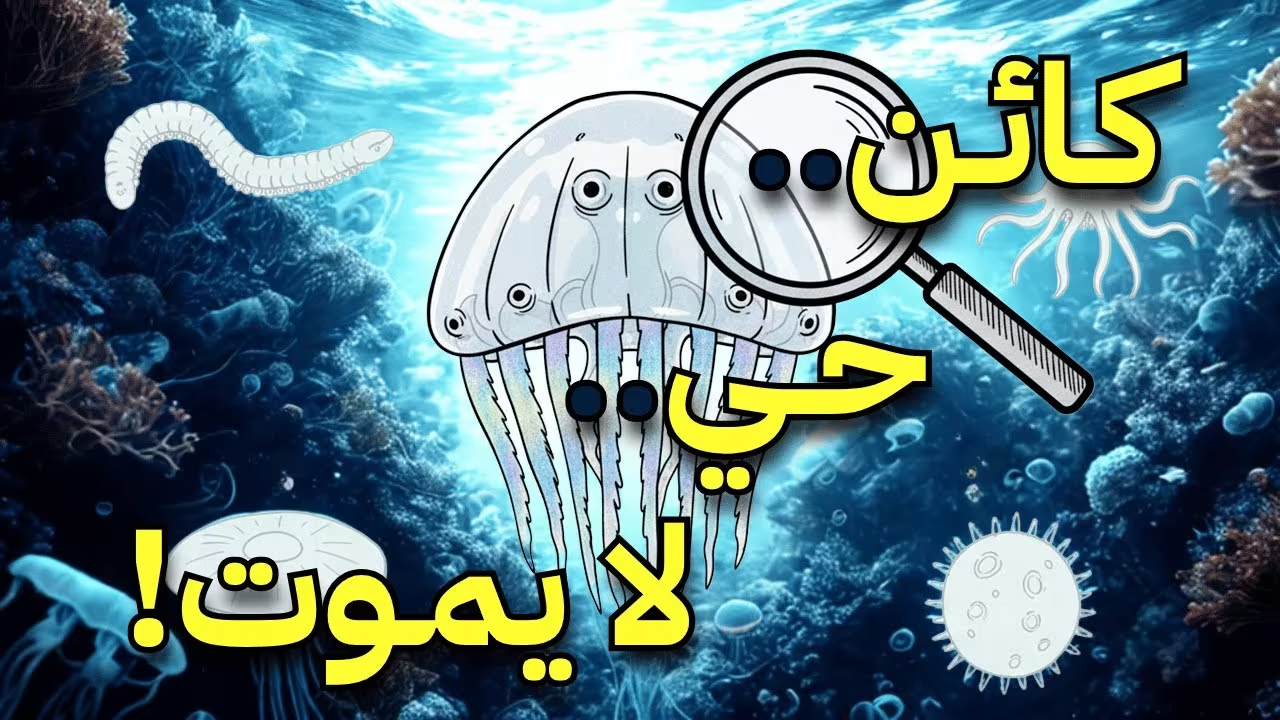
Aging, that relentless march of time, has long been considered an inescapable fate for all complex, multicellular life. From the moment we're born, our cells, tissues, and organs embark on a journey of gradual decline, a process we commonly refer to as senescence. This biological inevitability often feels like a universal tax paid for the privilege of life's intricate dance. For centuries, the dream of defying this natural progression, of halting the clock or even turning it back, has captivated human imagination, remaining firmly in the realm of myth and fantasy.
Yet, deep within the ocean's vast, mysterious expanse, a tiny creature swims, utterly oblivious to our preconceived notions of biological destiny. This unassuming hydrozoan, known as Turritopsis dohrnii—or more colloquially, the "immortal jellyfish"—doesn't merely resist the tides of time; it actively reverses them. When faced with environmental stress or physical damage, this remarkable organism possesses an extraordinary ability: it can revert its adult, sexually mature self back to an immature, juvenile stage, effectively hitting a biological reset button.
This incredible feat challenges our fundamental understanding of life, death, and the very definition of aging. It prompts profound questions: How does it achieve such a dramatic reversal? What cellular and molecular secrets does it hold? And, perhaps most compellingly, what could Turritopsis dohrnii's unique biology teach us about the possibility of rejuvenating human life, not for absolute immortality, but for a healthier, extended existence? Join us as we journey from the microscopic wonders of this "immortal" jellyfish to the ambitious horizons of human regenerative medicine, exploring the science that could redefine our biological future.
The Myth of Absolute Immortality: Redefining "Immortal"
When we hear the phrase "immortal jellyfish," an image of an indestructible, eternally living creature often springs to mind. However, scientific reality, as always, demands a more nuanced understanding. While Turritopsis dohrnii indeed possesses a remarkable ability to defy the conventional aging process, its "immortality" is far from absolute. It's crucial to distinguish between what scientists call biological immortality and the more mythical concept of absolute invincibility.
Turritopsis dohrnii is considered biologically immortal because it doesn't die from old age or cellular deterioration associated with senescence [2]. It possesses a unique biological mechanism that allows it to continually renew its cells and effectively reset its biological clock to zero. This means that, under ideal conditions, it could theoretically live indefinitely, never succumbing to the natural decay that leads to death in most multicellular organisms.
However, this doesn't make it invincible or immune to all forms of death. The oceans are fraught with dangers, and Turritopsis dohrnii is highly vulnerable to a myriad of environmental threats [2]. It faces predation from various marine creatures, including other jellyfish, anemones, tuna, and sea turtles [2]. Furthermore, it can perish due to diseases, extreme environmental changes in water temperature or salinity, or severe physical damage that overwhelms its regenerative capacity [2]. Therefore, its "immortality" is conditional and potential, a survival strategy activated when necessary rather than a constant state of being [2]. This precise distinction is vital, shifting our understanding of this fascinating creature from the realm of science fiction to the core of cellular and evolutionary biology. It highlights an ingenious strategy of survival, not an exemption from the dangers of life.
The Jellyfish's "Reverse Button": A Life Cycle Reversal
To truly appreciate the extraordinary capabilities of Turritopsis dohrnii, we must first understand its typical life cycle, a complex process common to many jellyfish. Life begins as a microscopic larva called a planula, which swims freely before settling on the seabed [4]. This planula then develops into a fixed colony of polyps [4]. These polyps reproduce asexually by budding, eventually releasing free-swimming jellyfish, known as medusae, into the water column [4]. These medusae mature sexually, releasing sperm and eggs into the water for sexual reproduction, which in turn produces new planulae, restarting the cycle [4]. For most jellyfish species, this stage marks the end of their journey; after reproduction, the medusae age and die [4].
But Turritopsis dohrnii breaks this fundamental rule. When faced with adverse conditions—be it environmental stress, starvation, sudden changes in water temperature or salinity, or even physical injury (like damage to its bell) [5]—the adult medusa doesn't perish. Instead, it initiates an astonishing process known as Life Cycle Reversal (LCR) [5]. Rather than dying, the adult medusa retracts its tentacles, and its bell and body contract and deteriorate, transforming into an undifferentiated mass of cells [5]. This mass then reattaches to a surface, where it develops into a new polyp colony, genetically identical to the original medusa [5]. Effectively, the adult jellyfish rewinds its biological clock, returning to a juvenile, immature stage from which it can then bud off new medusae, starting its life anew [5].
This evolutionary strategy is a masterclass in survival, combining the best of both worlds. It uses sexual reproduction via the medusa stage to ensure genetic diversity when conditions are favorable [5]. Then, when conditions turn harsh, it employs asexual reproduction through LCR via the polyp stage to ensure the survival of its genetic lineage [5]. This dual capacity, combined with its ability to travel globally as a "silent invader" in ballast water, explains its widespread distribution across the world's oceans [10].
The Cellular Magic: Transdifferentiation
The term "reverse senescence" isn't merely a poetic description of Turritopsis dohrnii's capabilities; it refers to a precise and profound biological process at the cellular level. The fundamental mechanism enabling the immortal jellyfish to rewind its life cycle is transdifferentiation [12]. Also known as "cellular transmutation" or "direct reprogramming," transdifferentiation is a biological process where one specialized cell type transforms directly into another specialized cell type, without first reverting to a pluripotent stem cell state [12].
"Transdifferentiation is a biological process where one specialized cell type transforms directly into another specialized cell type, without first reverting to a pluripotent stem cell state." [12]
In the context of Turritopsis dohrnii, this means that the mature, differentiated cells of the adult medusa—be they muscle cells, nerve cells, or epidermal cells—don't simply die off. Instead, they undergo a complete identity shift. For instance, a muscle cell in the bell of the jellyfish might directly transform into an epithelial cell in the newly formed polyp [12]. This isn't just a few cells undergoing change; it's a systemic, whole-body transformation, effectively recycling the entire adult organism into its juvenile form [2]. This process is distinct from dedifferentiation, where cells revert to a less specialized or stem-like state before re-differentiating into new cell types [14]. While related, T. dohrnii's transdifferentiation is a more direct and radical cellular metamorphosis.
What makes T. dohrnii's transdifferentiation so remarkable is its scale and completeness. It involves a coordinated activation of specific genetic pathways linked to pluripotency and stemness, effectively "resetting" the cellular identity across the entire organism [2]. This complex genetic orchestration ensures that the newly formed polyp is not just a collection of random cells but a coherent, functional organism ready to embark on a new life cycle. Understanding this intricate cellular choreography is key to unraveling the secrets of biological rejuvenation.
The Molecular Blueprint for Eternal Youth: Genetic Insights
The ability of Turritopsis dohrnii to achieve such a profound life cycle reversal is, at its heart, encoded in its genes. Recent breakthroughs in comparative genomics have begun to unravel the molecular secrets behind its extraordinary rejuvenation. By comparing the genome of T. dohrnii with that of its mortal cousin, Turritopsis rubra (which possesses some regenerative capacity in early stages but eventually dies after sexual reproduction) [9], researchers have identified unique genetic signatures in the immortal species. These aren't just one or two "magic genes," but a sophisticated, optimized regulatory network [9].
Protecting the Genetic Code: Telomeres and DNA Repair
One crucial aspect of aging in most organisms, including humans, is the shortening of telomeres—the protective caps at the ends of chromosomes [2]. Each time a cell divides, telomeres shorten, and when they become critically short, the cell enters a state of cellular senescence, ceasing to divide and contributing to tissue aging. Turritopsis dohrnii, however, possesses unique mechanisms for telomere maintenance. Genomic studies have revealed specific variants in a gene called POT1 (Protection of Telomeres 1), which plays a vital role in regulating telomere length [15]. These variants suggest that the jellyfish has evolved better control over cellular senescence, effectively preventing the telomere shortening that drives aging [15].
Furthermore, the radical cellular reprogramming involved in LCR is a highly stressful process for the genome, increasing the risk of harmful mutations. Yet, T. dohrnii manages this flawlessly. Its genome shows an expanded repertoire of genes associated with DNA repair [9]. Key DNA repair genes, like ATM (Ataxia-telangiectasia mutated), a primary responder to DNA damage, are uniquely adapted [15]. Transcriptome analyses during LCR reveal a significant upregulation of these repair genes, suggesting a "pre-emptive" strategy to maintain genomic integrity throughout the reprogramming process [8]. This robust DNA repair system ensures that the genetic blueprint remains pristine, protecting against the accumulation of errors that would otherwise lead to cellular dysfunction or cancer.
Rewriting the Cellular Destiny: Stem Cell Reprogramming
Maintaining long telomeres and a pristine genome isn't enough; the adult cells must "forget" their identity and revert to a juvenile state. This is where stem cell reprogramming comes into play. Genetic studies have identified a sophisticated molecular "control key" that orchestrates this transformation [9]. The process involves two critical steps during LCR:
- Unlock: In adult cells, developmental genes are typically "locked" by complexes like PRC2 (Polycomb Repressive Complex 2), which maintains the adult cellular identity [9]. During LCR, T. dohrnii effectively "silences" the targets of PRC2, freeing the cell from its differentiated state and making it plastic, ready for reprogramming [9].
- Ignition: Simultaneously, genes associated with embryonic stem cells and pluripotency, such as SOX2, OCT4, MYC, and NANOG (collectively known as "Yamanaka factors" in mammalian research) [16], are activated. These genes "ignite" the genetic program for the juvenile polyp stage [16]. Notably, T. dohrnii exhibits additional copies of certain stem cell pathway genes, like GLI3, which are absent or less prominent in its mortal cousin, T. rubra [15].
This intricate, dual "lock and key" system allows T. dohrnii to safely and precisely reprogram its cells. Without such a controlled system, attempts at reprogramming would likely lead to cellular chaos and potentially fatal outcomes, a critical difference from its mortal cousin that lacks this refined control system [9].
Beyond the Jellyfish: Other Masters of Regeneration
While Turritopsis dohrnii's ability to reverse its entire life cycle is undeniably unique, it's not the only creature in the animal kingdom to exhibit extraordinary regenerative capabilities. Exploring other models helps us contextualize the jellyfish's singularity and provides diverse blueprints for understanding biological renewal.
The Hydra's Constant Renewal
Hydra, a freshwater polyp related to jellyfish, is another cnidarian renowned for its negligible senescence [17]. This means its mortality rate does not increase with age; it effectively doesn't age in the traditional sense. Unlike T. dohrnii's dramatic life cycle reversal, Hydra's "immortality" stems from a continuous, intrinsic process of cellular turnover [17]. Its body is constantly renewed by three potent lineages of stem cells—ectodermal, endodermal, and interstitial stem cells [18]. These stem cells are perpetually dividing, replacing all specialized cells in the Hydra's body roughly every 20 days [18].
This constant renewal allows Hydra to regenerate its entire body from a tiny fragment or even from disaggregated cells [17]. It also possesses "slow-cycling" stem cells, similar to those found in mammals, which can be rapidly activated upon injury [20]. While Hydra also utilizes transdifferentiation to some extent, its primary strategy is this perpetual stem-cell-driven maintenance [21]. If T. dohrnii represents an "emergency reboot" system, Hydra embodies a "rolling maintenance" strategy—both achieve biological immortality, but through distinct cellular approaches.
Planarian's Whole-Body Rejuvenation
Planarians, a type of flatworm (Platyhelminthes), are true champions of whole-body regeneration [22]. A tiny piece of a planarian's tail, for instance, can regenerate an entire head, and vice versa. This remarkable ability isn't about reversing aging, but about "regeneration-on-demand" [22]. The planarian's regenerative power relies almost entirely on a unique population of highly pluripotent adult stem cells called neoblasts [22].
Neoblasts are the only dividing cells in the adult planarian body and can generate all cell types (over 30 specialized types) required for a complete organism [22]. When a planarian is amputated, these neoblasts migrate to the wound site, rapidly proliferate, and then differentiate to rebuild the missing part, forming a blastema [22]. This model is exclusively stem-cell-dependent, distinct from the transdifferentiation-driven reprogramming seen in Turritopsis dohrnii.
Salamander's Targeted Transdifferentiation
Perhaps the most startling and evolutionarily relevant example comes from salamanders, a vertebrate animal, making them evolutionarily closer to humans. Salamanders possess the astonishing ability to regenerate complex body parts, including severed limbs (bones, muscles, nerves, skin), tails, jaws, and even parts of their eyes and brains [12].
Crucially, the mechanism employed by salamanders for this targeted regeneration is transdifferentiation [12]. When a salamander's limb is amputated, specialized cells near the wound (like muscle cells and cartilage cells) dedifferentiate, forming a blastema. These cells then redifferentiate to precisely rebuild the missing limb [12]. This discovery is monumental because it proves that transdifferentiation is not a peculiar trick limited to cnidarians but a biological capacity present in vertebrates. While this capacity is local and limited in salamanders (they don't reverse their entire life cycle), it provides a crucial evolutionary bridge. It suggests that the genes and pathways required for cellular reprogramming might be "dormant" or "latent" in other vertebrates, including humans, offering hope for their eventual "awakening" for therapeutic purposes.
The Human Frontier: Promise and Paradox
The extraordinary capabilities of Turritopsis dohrnii, particularly its mechanism of transdifferentiation and whole-body cellular reprogramming, have profoundly inspired scientists in their quest to apply these principles to human health, specifically in the field of regenerative medicine [5]. The goal is not to make humans "immortal" or to revert us to infancy, but to leverage the principles of cellular reprogramming to repair or replace damaged or diseased tissues and organs.
Unlocking Human Potential: Regenerative Medicine
Turritopsis dohrnii provides researchers with a "genetic parts list" and a molecular "wiring diagram" of rejuvenation [16]. By understanding the LCR process—which genes are activated (like Yamanaka factors and pluripotency targets [9]) and which are suppressed (like PRC2 [9])—scientists aim to engineer molecular "cocktails" or genetic therapies capable of inducing safe and directed transdifferentiation in human cells [23]. The potential applications are immense: Imagine transforming scar tissue in a heart attack patient into functional heart muscle cells, reprogramming glial cells in the brain to replace lost neurons in Parkinson's or Alzheimer's disease, or even converting fibroblasts into nerve cells [23]. The salamander, a vertebrate, offers living proof that nature has already developed the necessary tools for such transformations.
The Grand Paradox: Immortality's Dark Side
However, here lies the greatest obstacle and the most profound paradox in this field. In complex organisms like humans, the very mechanisms that prevent aging are often the same ones that can lead to cancer [13]. Uncontrolled transdifferentiation or incomplete cellular reprogramming is closely linked to various pathologies, most notably cancer [13]. Many of the "hallmarks of cancer"—such as evading senescence, maintaining telomere length, altering cell identity, activating pluripotency pathways, and unlimited proliferation—mirror the strategies T. dohrnii employs for its biological immortality [13].
This means the real challenge for scientists is not just "how to initiate" transdifferentiation in human cells, but "how to control it" and "how to stop it." Over millions of years, T. dohrnii has evolved exquisite molecular "brakes" (such as the precise regulation of PRC2) and superb DNA repair systems that prevent chaotic regeneration from turning into malignancy [9]. Understanding these "safety brakes" that T. dohrnii has developed is as crucial as understanding the "engine" of rejuvenation itself.
Lessons from Giants: Peto's Paradox
The animal kingdom offers further wisdom regarding longevity and cancer. While T. dohrnii teaches us about rejuvenation, long-lived large mammals like elephants and whales teach us about "resistance" [24]. These enormous creatures, with trillions more cells than humans, should, statistically, face a vastly higher risk of cancer – a phenomenon known as Peto's Paradox [24]. Yet, their cancer rates are significantly lower than ours.
The solution isn't in reversing aging, but in having "better cancer resistance mechanisms" [24]. Elephants, for example, possess 20 copies of the tumor-suppressor gene p53 (often called the "guardian of the genome"), compared to only two in humans [24]. Whales also have a greater number of tumor-suppressor genes. These animals have specialized systems for repairing DNA damage and eliminating cancerous cells before they can proliferate [24]. This holistic view suggests that the future of anti-aging research will likely involve a "synthetic" approach, combining enhanced "damage resistance" (inspired by elephants and whales) with controlled "reprogramming and rejuvenation" (inspired by T. dohrnii and salamanders).
Watch the Full Discussion
Sources & References
Key Sources
- قنديل البحر الخالد - المعرفة
- Immortal jellyfish | Life Cycle, Habitat, Size, & Facts – Britannica
- An “Immortal” Jellyfish Offers Clues into Biological Aging | The Scientist
- Transcriptome Characterization of Reverse Development in Turritopsis dohrnii (Hydrozoa, Cnidaria) - PMC - PubMed Central
- Comparative genomics of mortal and immortal cnidarians unveils novel keys behind rejuvenation | PNAS
- The "Immortal" Jellyfish That Resets When Damaged | AMNH
- تمايز تحولي - ويكيبيديا
- Regeneration and Immortality: Aging of the Jellyfish Turritopsis dohrnii (P12-4.006)
- The genetic networks of regeneration, cell plasticity, and longevity of the Immortal Jellyfish Turritopsis dohrnii (Cnidaria, Hydrozoa) | bioRxiv
- Cellular and Molecular Mechanisms of Hydra Regeneration - PMC - PubMed Central - NIH
- Model systems for regeneration: planarians – AMOLF Institutional ...
- قنديل البحر والحيتان.. حل واعد لأمراض الشيخوخة - صحيفة المراقب العراقي
View Full Bibliography
- قناديل البحر الخالدة: سر الخلود الطبيعي في أعماق البحار - المجال
- Turritopsis dohrnii - Wikipedia
- Turritopsis dohrnii, https://therealimmortaljellyfish.com/
- This Jellyfish Can Reverse It's Age,Turritopsis dohrnii, commonly known as the immortal jellyfish, is a species that has the unique ability to reverse its aging process. When faced with stress or physical damage, the jellyfish can revert to an earlier stage of its life cycle : r/Damnthatsinteresting - Reddit
- Turritopsis dohrnii - Marine Invasions research at SERC
- Retrodifferentiation--a mechanism for cellular regeneration? - PubMed
- Comparative genomics of mortal and immortal cnidarians unveils ...
- MECHANISMS OF DEVELOPMENT AND REGENERATION IN HYDRA - PMC
- https://pmc.ncbi.nlm.nih.gov/articles/PMC7116057/#:~:text=Hydra%20can%20regenerate%20missing%20body,these%20cells%20are%20pelleted%20(Fig.
- Slow-cycling stem cells in hydra contribute to head regeneration | Biology Open
- Stem cell differentiation trajectories in Hydra resolved at single-cell resolution | bioRxiv
- Exploring an immortal Turritopsis sp. as a less conventional natural system for study of aging
Conclusion
The journey from the tiny Turritopsis dohrnii to the grand visions of human regenerative medicine reveals a profound shift in our understanding of life's fundamental boundaries. The "immortal jellyfish" has shattered the entrenched belief that aging is an irreversible, one-way street and that cellular identity is immutable. Its remarkable ability to perform a Life Cycle Reversal through transdifferentiation, orchestrated by an intricate molecular network protecting its telomeres, repairing its DNA, and precisely reprogramming its cells, stands as a testament to nature's boundless ingenuity.
Yet, as we've seen from other regenerative masters like Hydra, Planarians, and Salamanders, and the cancer-resistant giants like elephants and whales, there is no single "magic bullet" for defying time. Instead, the path forward for human health lies in a nuanced, holistic approach. It involves not just deciphering the "engine" of rejuvenation from T. dohrnii, but equally understanding and implementing the sophisticated "safety brakes" that prevent such powerful biological processes from veering into malignancy.
The grand paradox of regeneration and cancer underscores that the quest for extending a healthy human lifespan is not merely about pushing biological limits, but about achieving a delicate balance. It’s about learning to harness cell plasticity, to activate dormant regenerative pathways, and to enhance our innate defenses against cellular chaos. Ultimately, the lessons from these extraordinary creatures are guiding us towards a future where aging may no longer be an unchangeable fate, but a malleable process, allowing us to redefine the very quality and duration of human life, not for absolute immortality, but for sustained vitality and well-being. The challenge is immense, but the scientific promise, illuminated by a tiny jellyfish, is truly boundless.